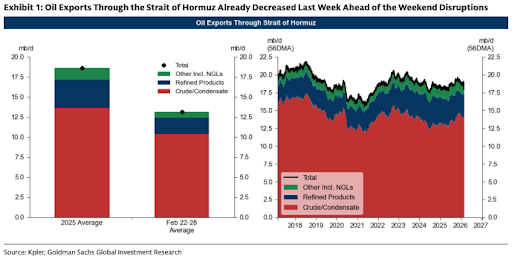
Tanker traffic through the Strait of Hormuz—through which normally 1/5 of global supply for both oil and LNG flows—appears significantly disrupted as many shippers, oil producers, and insurers have shifted to a cautious wait-and-see mode amidst reports about damaged ships. For now, their base case energy price forecasts, which assume no sustained supply disruptions, are unchanged.
The Risks to Energy Prices From Iran
Goldman Sachs
Research
18 Pages
Key Takeaways
Hormuz is the hinge: Short disruptions can spike risk premia, even if actual supply damage remains limited.
Oil buffers exist: Inventories and spare capacity can soften shocks, but closure duration drives nonlinear price outcomes.
Gas is more fragile: LNG disruption risks can force demand destruction overseas, while US gas remains relatively insulated.