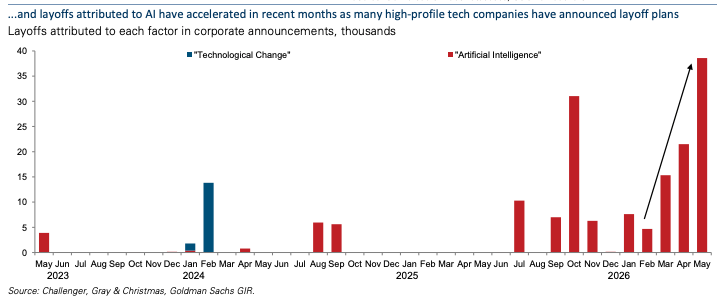
The authors examine whether rapid advances in AI could trigger widespread job losses or simply reshape the labor market over time. Drawing on perspectives from Goldman Sachs economists and MIT researchers, they argue AI is more likely to create temporary labor disruption than a lasting employment crisis, while the bigger question is whether businesses use AI to replace workers or make them more productive.
An AI Job Apocalypse?
Goldman Sachs
Allison Nathan
Research
26 Pages
Key Takeaways
Temporary disruption: Goldman Sachs estimates AI could displace over 9% of the labor force (about 15 million workers), but expects new jobs to absorb most losses over time.
Modest effects today: AI has reduced monthly payroll growth by roughly 16,000 jobs and increased the unemployment rate by just 0.1 percentage point so far.
Earnings still uncertain: Goldman Sachs forecasts a 15% long-run productivity and GDP uplift from AI, yet only 2% of S&P 500 companies linked AI productivity gains to earnings.