Value investing: avoiding climate traps

Robeco

Research

12 Pages

Robeco discusses how traditional value portfolios can fall into climate traps when cheap looking companies face rising environmental costs. The piece introduces a decarbonized value approach that adjusts valuations for carbon risk while aiming to preserve exposure to the value factor. It also compares conventional and decarbonized value strategies across regions and time periods.

Date published: April 2023
Key Takeaways

Climate traps explained: Value portfolios often overweight high footprint companies whose future carbon costs are not reflected in valuations.
Decarbonized value approach: Method adjusts value signals for carbon intensity so high emitting firms look less attractive in rankings.
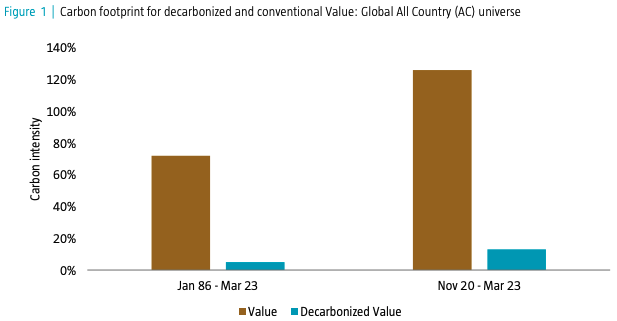
Impact on exposure: Analysis shows carbon footprint of value portfolios was about 72% higher before applying the decarbonization methodology.
Source: Robeco, Refinitiv, Trucost. The graph shows the average and current carbon intensity of the highest value quintile portfolio minus the lowest value quintile portfolio as a percentage of the footprint of the equally-weighted universe for the conventional and decarbonized value composite. A positive number means value stocks have a larger footprint than non-value stocks. Carbon intensity is the total GHG emissions in tons of CO2 equivalent (tCO2eq) per one million USD revenues. The investment universe consists of all nonfinancial constituents of the MSCI Developed and Emerging Markets indices. The sample period is January 1986 to March 2023 (left) and November 2020 to March 2023 (right).

Join our newsletter to have all of this content + Exclusive Newsletter Bonus Content delivered to your inbox every week

Scroll to Top