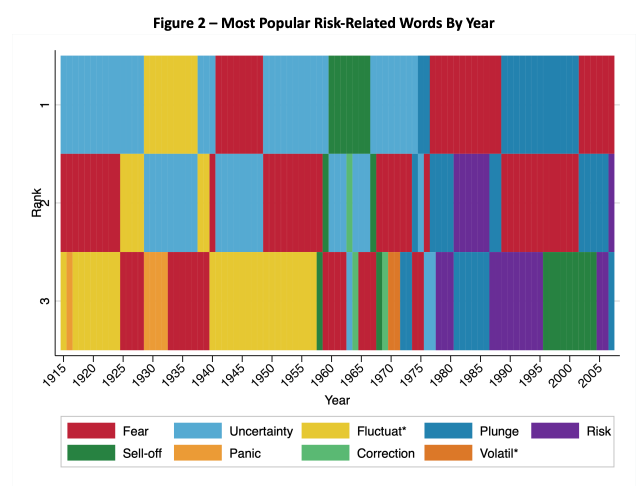
The authors trace how equity risk evolved from treating stocks as speculation or inflation hedges to measuring volatility and consumption correlation. Markowitz’s 1952 framework gained traction only in the 1960s, suggesting historical prices reflected investors’ period-specific models rather than today’s understanding of risk.
A Brief History of Financial Risk
Samuel Hartzmark, David Solomon
Research
59 Pages
Key Takeaways
Stocks were speculation: Early 20th-century investors often excluded equities from investment, viewing them mainly as speculation or protection against inflation.
Volatility arrived late: Markowitz introduced single-period return variance in 1952, but the framework did not become widely accepted until the 1960s.
Macro risk came later: Lucas linked risk to consumption correlation in 1978, only seven years before Mehra and Prescott’s 1985 equity premium puzzle.